Patapsco Valley State Park
While walking the paths at Patapsco State Park, I reflect on how I relate to this environment and what the land reveals about its own memory. I consider how nature communicates the history of our use, where traces of industry remain embedded in the landscape, and how active relationships between land and labor continue to surface.
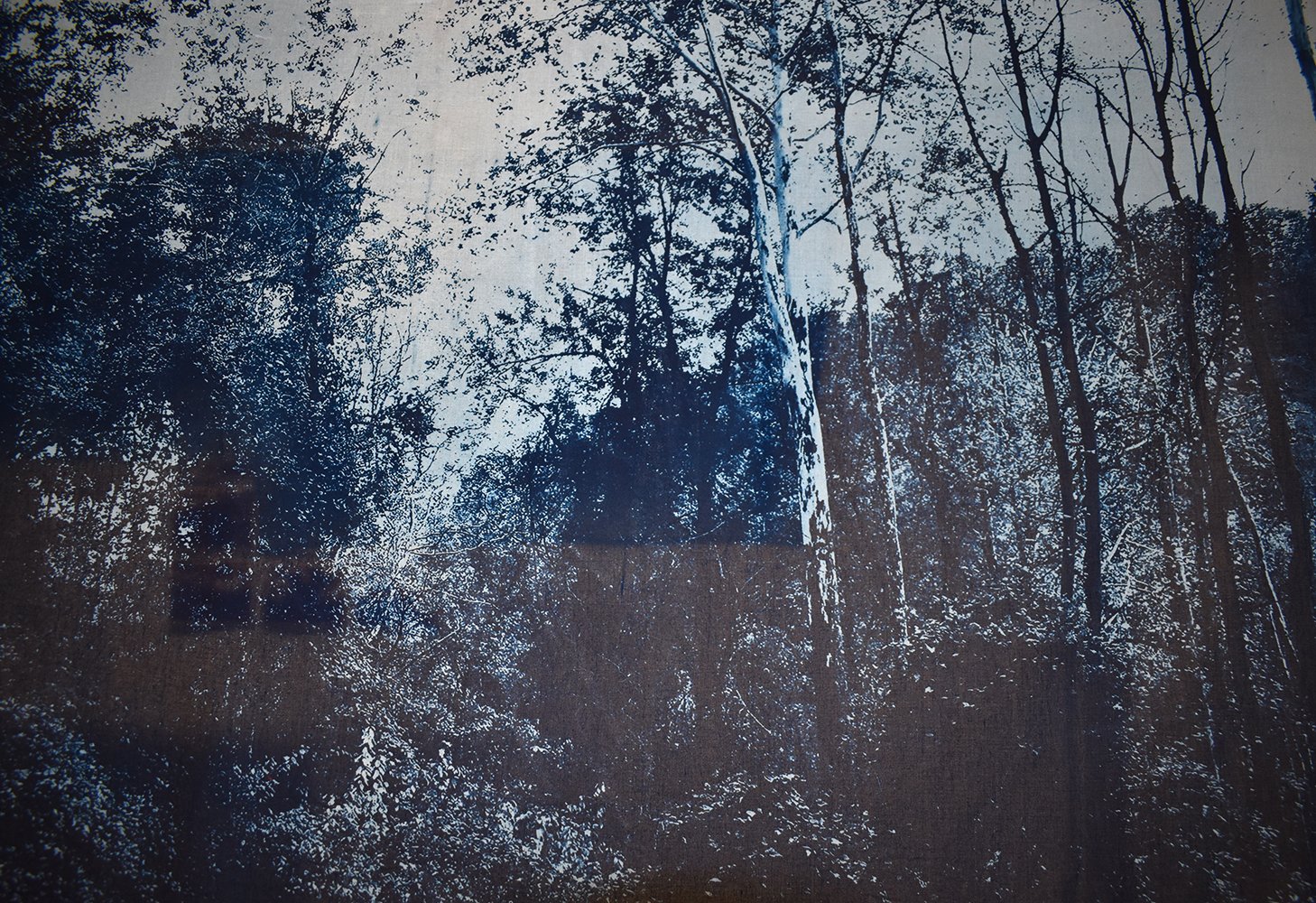
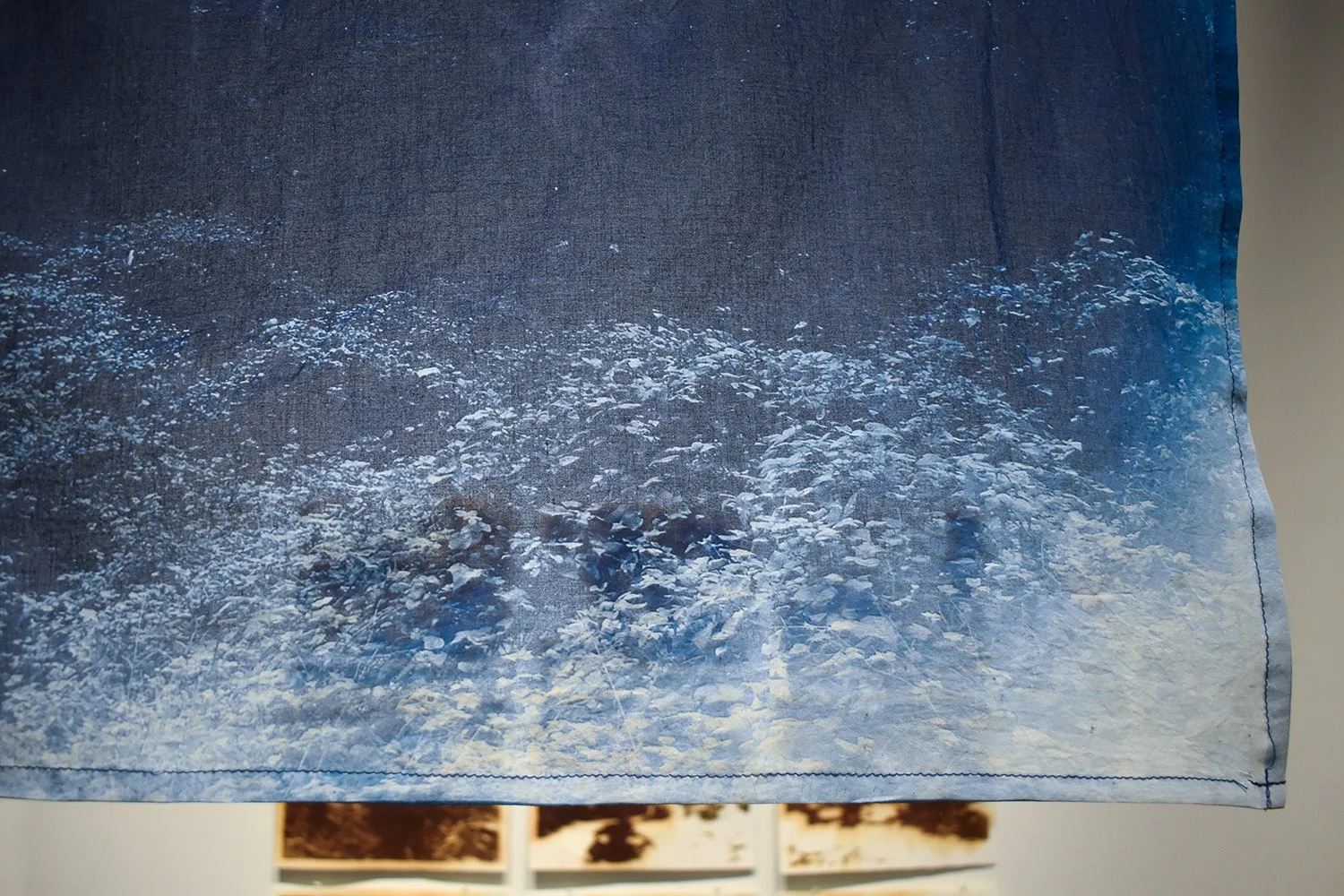
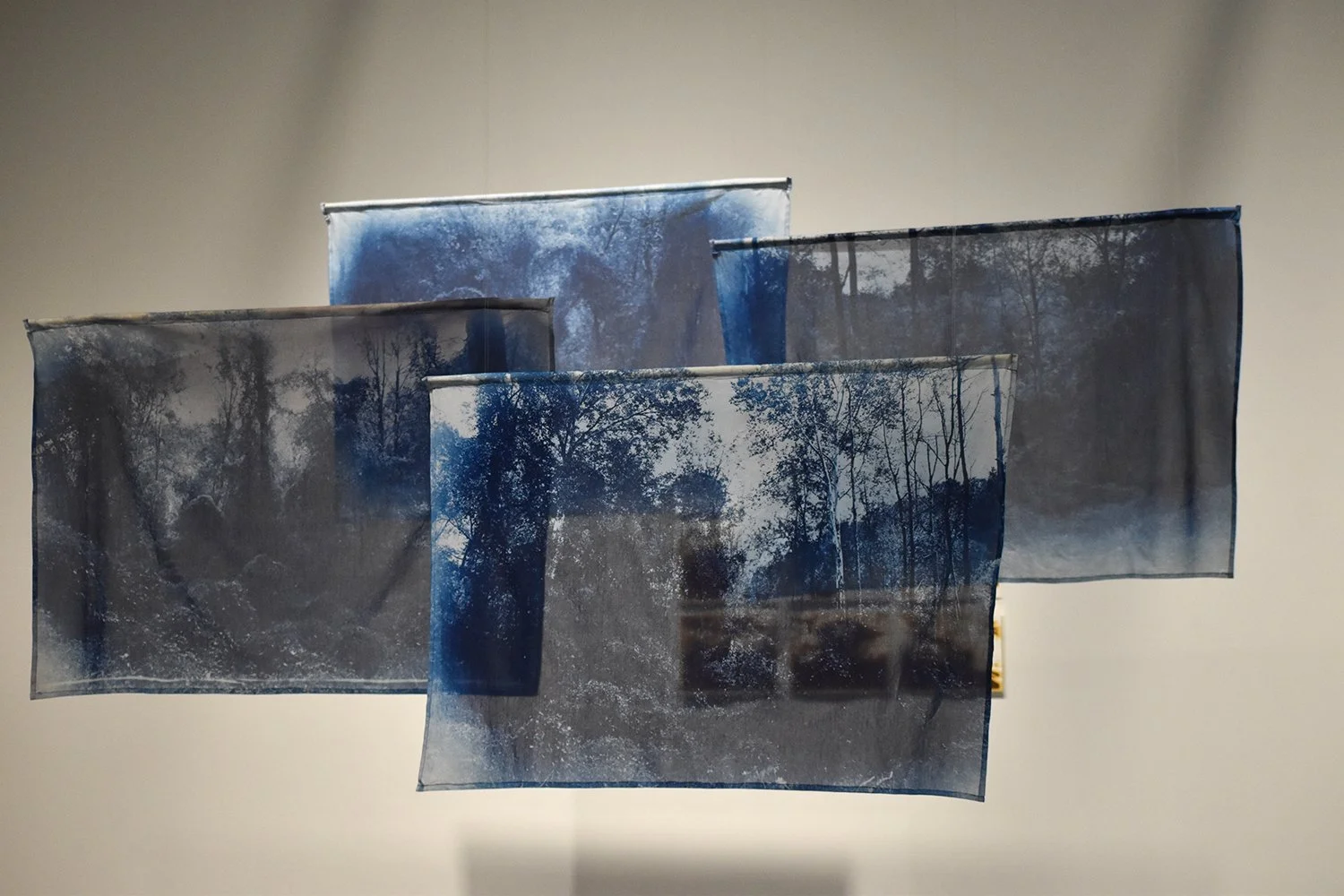
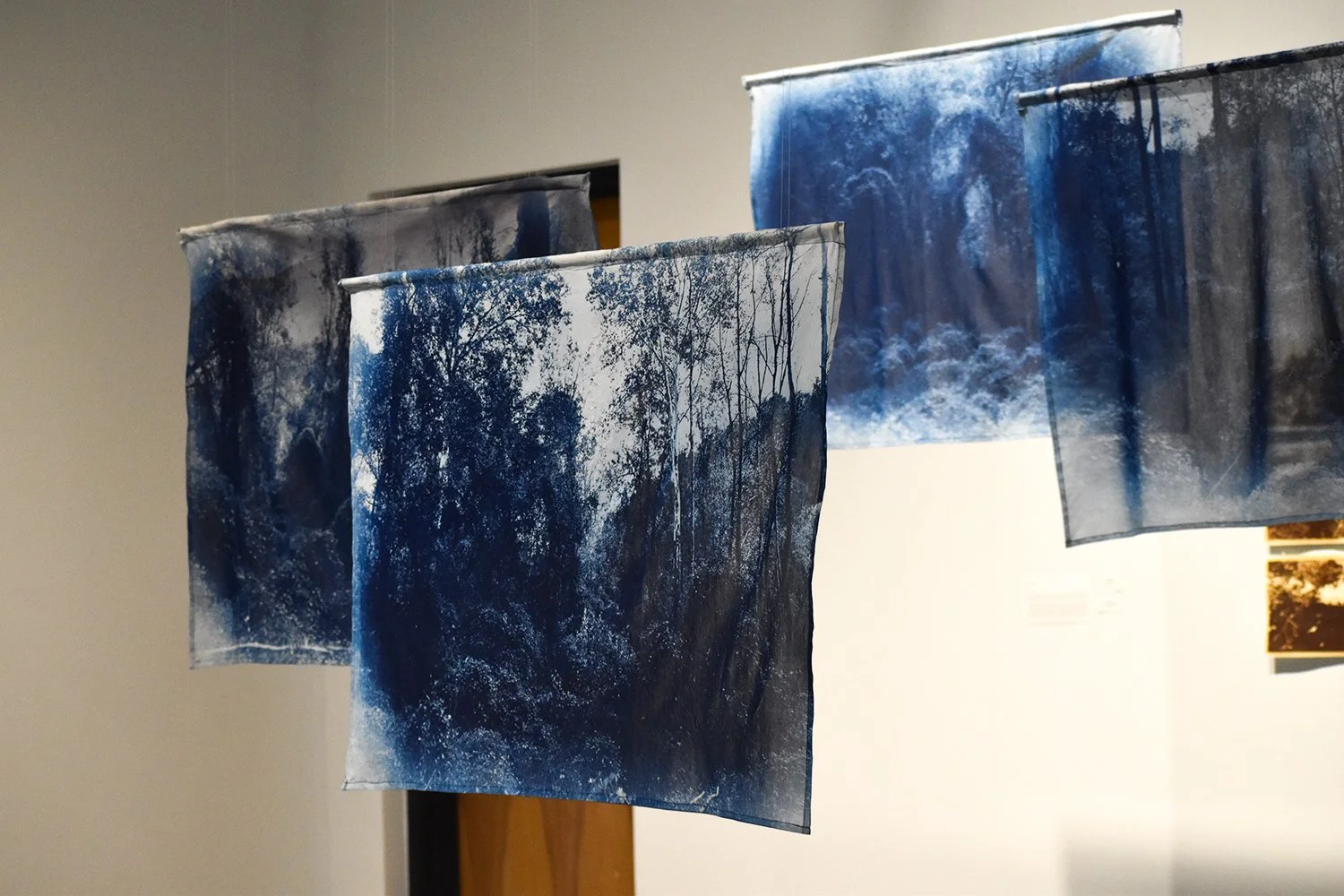
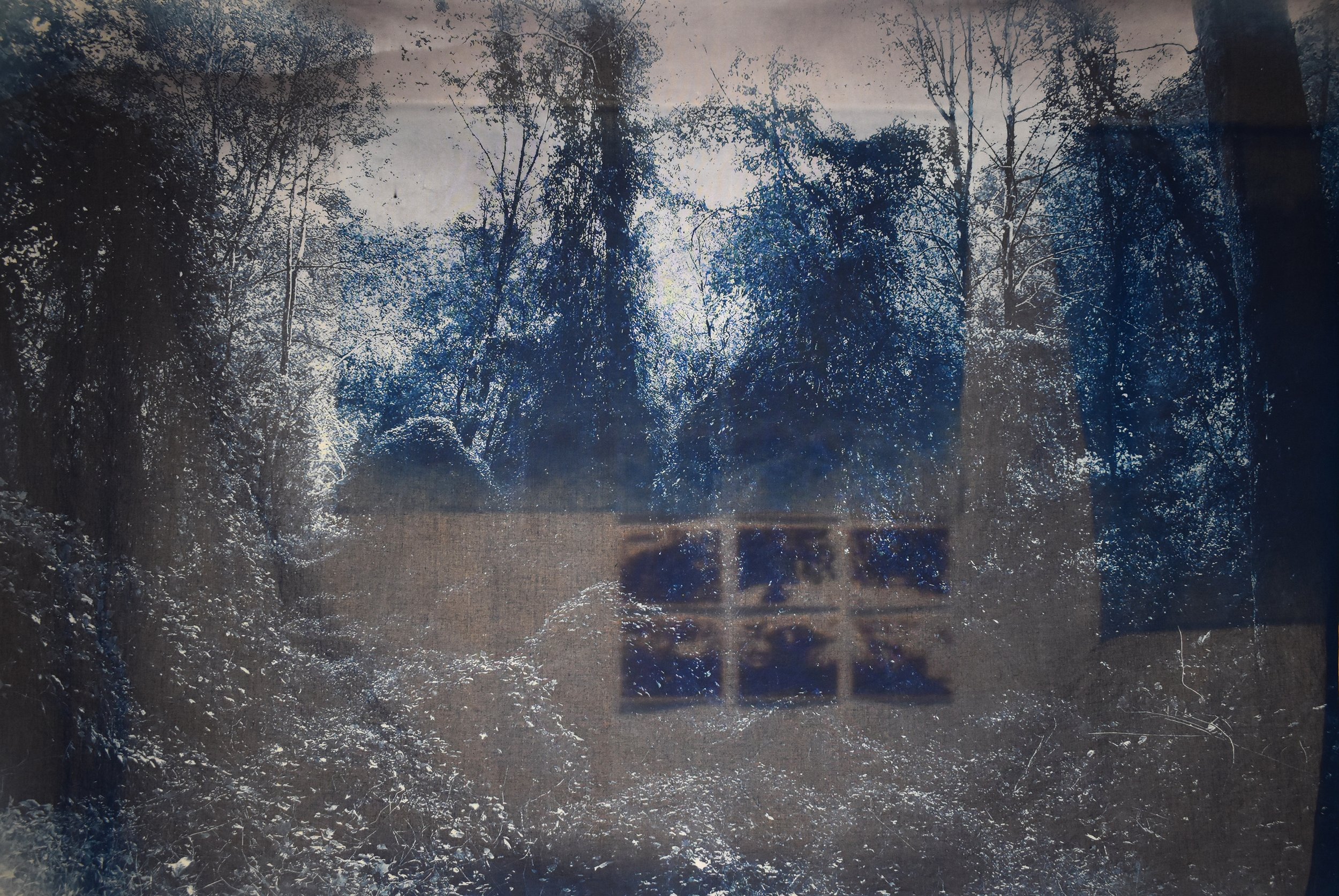
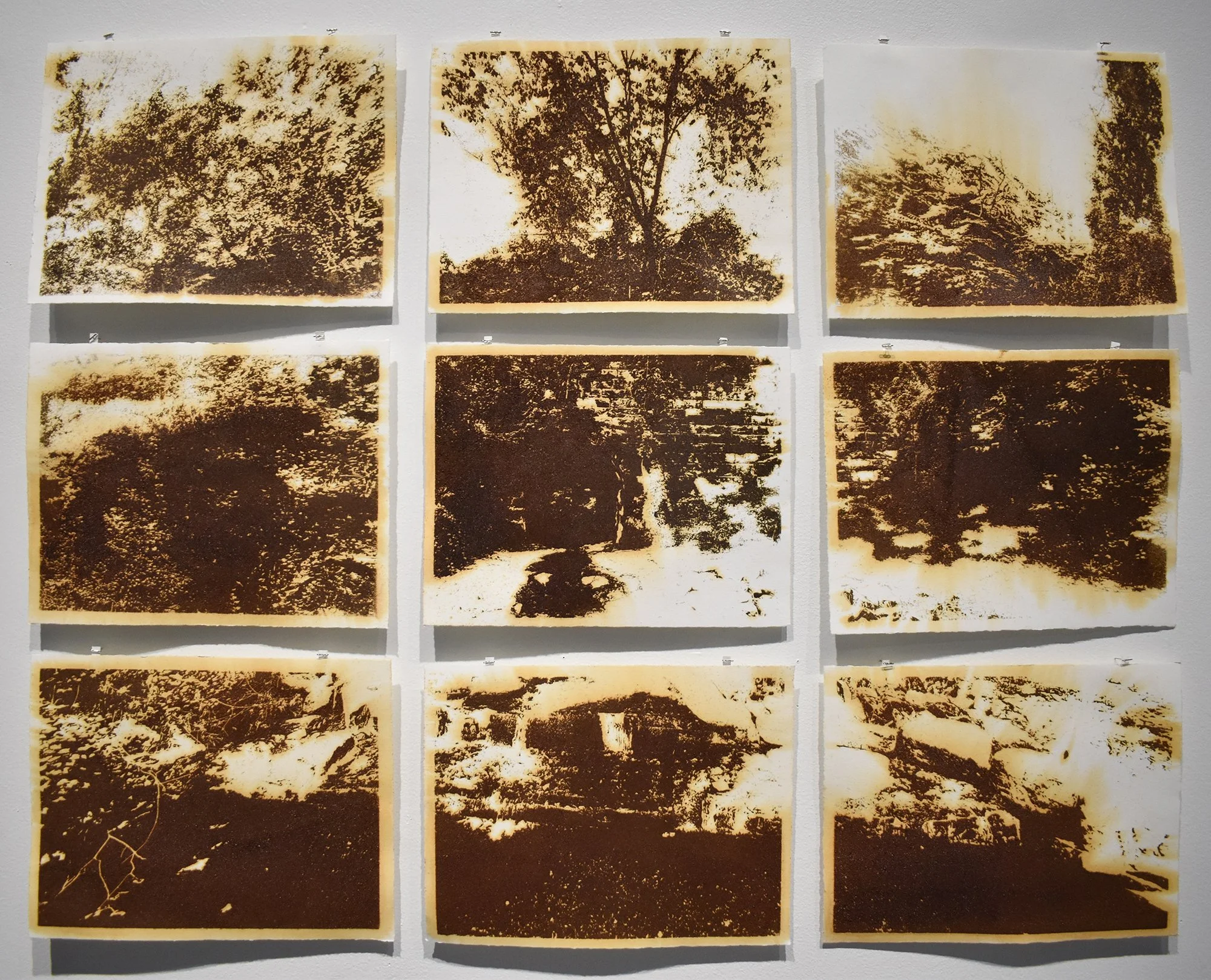
Through transformative print and photographic processes, I explore how the physicality of the landscape can speak to its history. Rust prints made from screenprinted iron powder depicting an active railroad site, reference the ironworks industry and its role in the consumerist use of the land and its slow decomposition. Alongside this, cyanotypes on fabric depicting the kudzu plant choking out native foliage, create an immersive environment that foregrounds themes of invasion, dominance, and ecological imbalance. I investigate kudzu, an invasive plant naturalized for use along the railroad to control erosion, as a vessel for colonial practices and human intervention. What was introduced as a solution has become a marker of displacement, control, and imbalance.
This work reflects a fractured relationship between humans and nature. By entering this space, I aim to reframe that relationship and contextualize the memory the land holds. Where does memory surface in nature? How can we see plants not as background, but as agents existing on the same plane as ourselves?
Our Trees Were Made For Your Iron screenprinted iron oxide on arches